Knee pain is one of the most common reasons people seek physiotherapy at our Brisbane clinics. At GymTherapy, our AHPRA-registered experienced physiotherapists assess, diagnose and treat knee pain using evidence-based methods including manual therapy, progressive strengthening, and objective strength testing with AxIT force plates. Physio treatment for knee pain is available at our West End and Newstead clinics in Brisbane for athletes and active individuals.
As the largest joint in the body, the knee is vulnerable to a variety of injuries that cause both knee pain and limited movement. These include overuse injuries, strength deficits, biomechanical factors, or acute trauma. Our comprehensive assessment identifies the underlying cause and guides targeted treatment to reduce pain and improve function. Whether you're a runner dealing with patellofemoral pain, an athlete recovering from a meniscus injury, or experiencing knee pain during daily activities, we provide expert care to help rebuild strength, mobility and function. So you can get back to training, performance and daily life with confidence.
This guide explains common causes of knee pain, how we assess knee injuries, our treatment approach, and when to seek physiotherapy for knee pain.
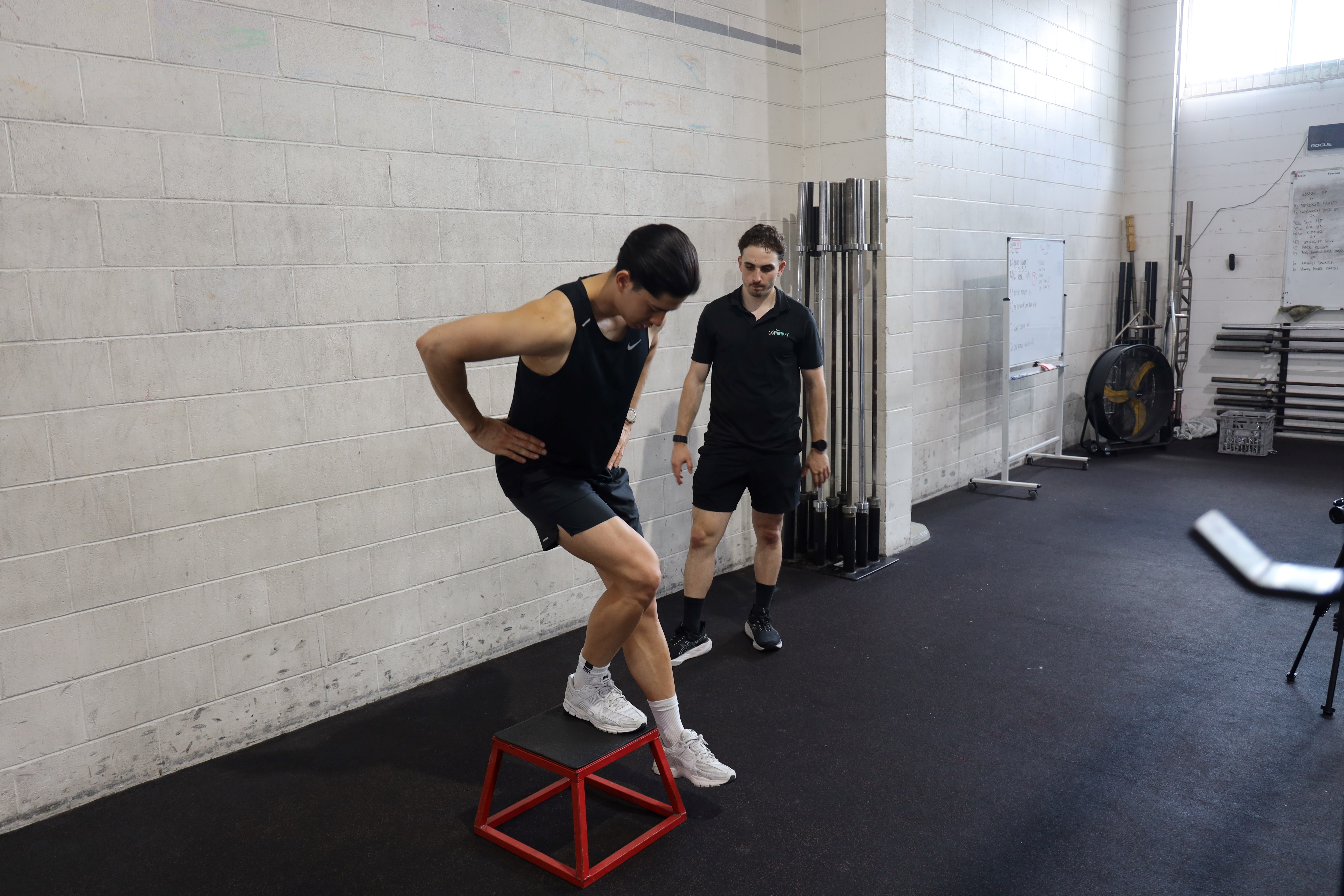
Knee pain can occur when injury to associated structures and mechanisms impacts movement. Knee injury can affect the tendons, ligaments, bursae (fluid-filled sacs) surrounding the knee joint or it’s bones, cartilage and ligaments. Medical conditions can also cause knee pain. Common diagnoses we see at our Brisbane physio clinics include:
What it is:
This condition typically presents as knee pain around or behind the kneecap, often during activities like running, squatting, or stairs. It is one of the most common knee conditions in active individuals.
Common causes:
Hip and quadriceps weakness, training load increases, biomechanical factors such as excessive knee valgus (inward collapse), or poor patellar tracking.
Who gets it:
Runners, cyclists, hikers, and anyone increasing training volume or intensity too rapidly.
What it is:
Torn meniscus is a common knee injury that causes knee pain, swelling and stiffness. The meniscus cartilage cushions the knee joint acting as a shock absorber between the shinbone and thighbone. Causes include tears from acute trauma (twisting injury) or degenerative changes over time.
Common causes:
Forceful twisting movements under load, sudden direction changes, or age-related degeneration. It is important to note that not all meniscus tears require surgery. Managing the injury conservatively with physiotherapy treatment to relieve knee pain and associated symptoms can give the injury time to heal on its own.
Who gets it:
Athletes in sports involving cutting and pivoting, or older adults with degenerative changes (age-related wear).
What it is:
Patellar Tendinopathy or ‘jumper’s knee’ is pain and damage in the patellar tendon, which runs from the kneecap patella) to the shinbone. This tendon facilitates movements such as running, kicking and jumping. Injury causing knee pain can occur from tendon overload, typically from repetitive stress during activities such as jumping, running or explosive movements.
Common causes:
Knee pain and damage in the tendon can occur due to repeated forceful loading from jumping, running and sudden stops. Other factors include rapid increases in training volume and intensity or weakness in the quadriceps and posterior chain.
Who gets it:
This condition is prevalent in football, basketball and volleyball players, along with CrossFit athletes, and runners.
What it is:
ACL and MCL injuries can range from a mild strain to a complete tear. Both of these ligaments support knee stabilisation and when injured can result in knee pain, swelling and difficulty walking. ACL injuries often occur during non-contact pivoting or landing movements whilst MCL injuries typically result from direct impact to the knee.
Common causes:
ACL injury factors include sudden deceleration, landing from jumps, or sudden twisting movements. In MCL injuries, the knee may take a direct impact from the outside, bend too far inward causing strain or tearing. Risk factors include strength deficits, poor landing mechanics, and fatigue.
Who gets it:
These type of knee injuries are prevalent in team sport athletes, skiers, and anyone involved in high-speed or pivoting sports.
What it is:
This joint condition frequently occurs due to age-related wear of knee cartilage causing knee pain, stiffness, and sometimes swelling. Osteoarthritis symptoms are typically worse after inactivity or high-load activities.
Common causes:
Factors include prior injury, genetics, alignment factors, or cumulative load over time. Treatments including physiotherapy can help manage symptoms such as knee pain and improve joint function.
Who gets it:
Typically adults over 50, though it can occur earlier in athletes with a history of prior knee injury.
What it is:
ITB Syndrome is an overuse injury causing sharp knee pain on the outside (lateral) aspect of the knee. This happens when friction of the iliotibial band tendon over the lateral femoral condyle (that forms part of the knee joint) occurs.
Common causes:
Tight Iliotibial band causes include hip abductor weakness, excessive hip drop during running, rapid increases in training volume, particularly on hills. Other factors include genetics and medial compartment arthritis in the knee joint tightening the iliotibial band.
Who gets it:
Athletes such as long-distance runners, cyclists, hockey players, skiers and soccer players.
Effective treatment starts with thorough assessment to identify the cause of your knee pain.
Our targeted, evidence-based approach begins by understanding:
- How your knee pain started (sudden injury vs gradual onset)
- Location and nature of pain (sharp, aching, stabbing)
- Activities that aggravate or ease symptoms
- Training history and recent changes in activity
- Previous injuries or treatments
- Your goals and activity requirements
This information guides our physical assessment and treatment planning.
Movement screening:
We assess squat patterns, single-leg balance, and functional movements relevant to your activities. This identifies movement compensations and pain-provoking activities.
Joint assessment:
Palpation to identify tender structures, joint range of motion testing, and special tests to assess ligaments, meniscus, and patellar tracking.
Strength testing:
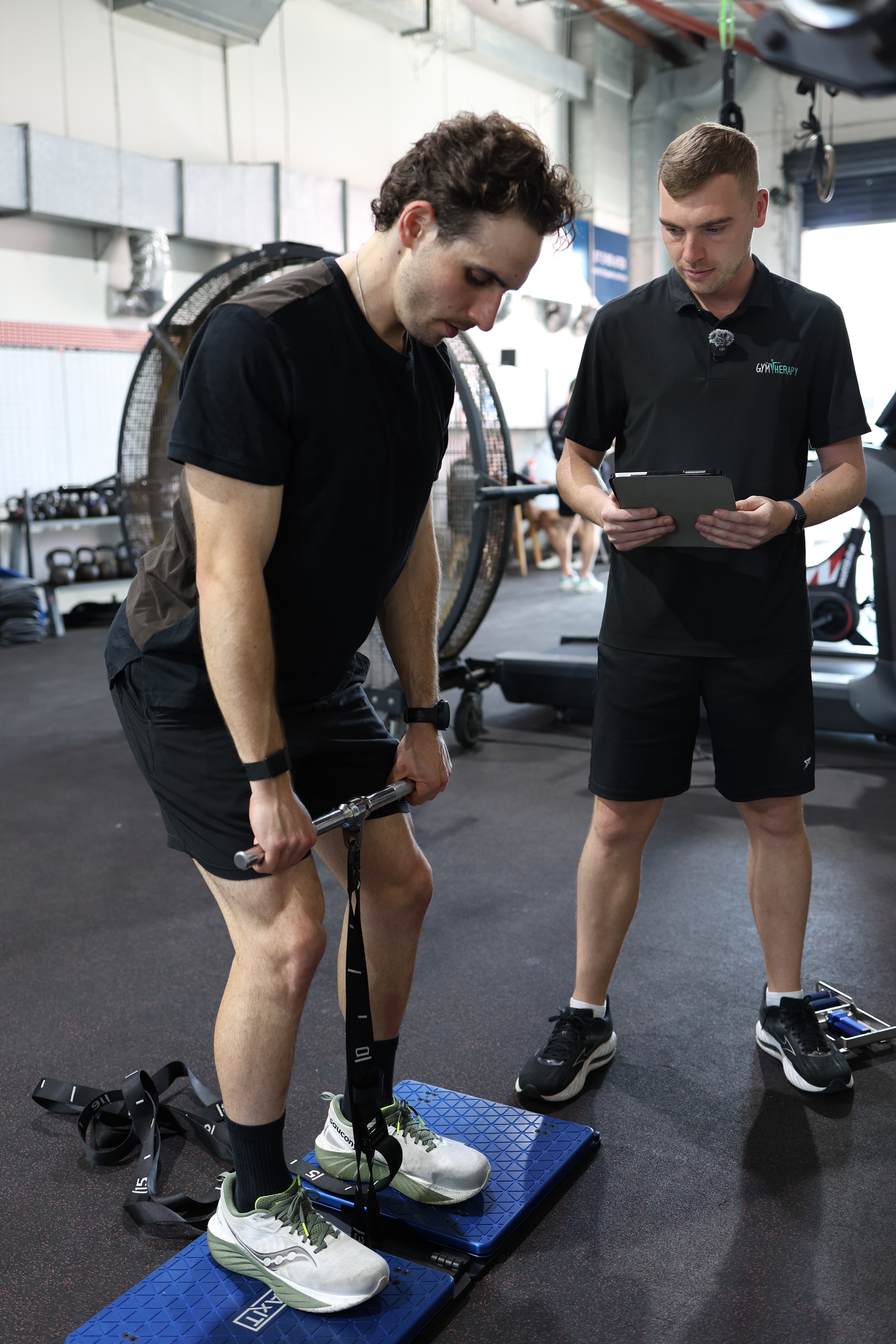
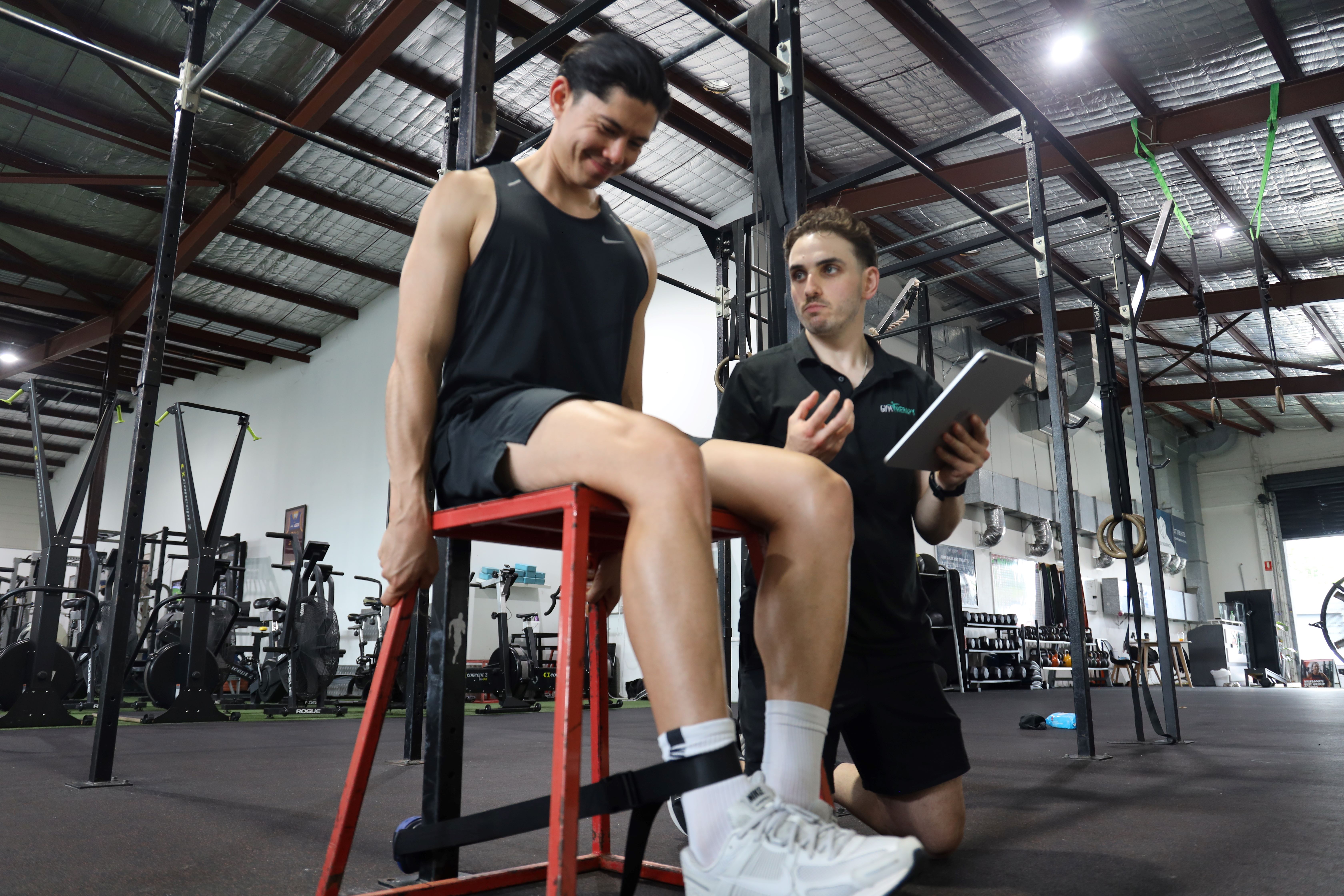
Manual muscle testing of quadriceps, hamstrings, hip abductors, and glutes. For athletes and those wanting objective data, we use AxIT force plate testing for precise strength measurement.
Biomechanical assessment:
For runners and athletes, we may perform video gait analysis or movement screening to identify biomechanical factors contributing to knee pain.
GymTherapy Brisbane uses AxIT force plates for objective strength assessment:
What we measure:
- Quadriceps and hamstring strength (isometric testing)
- Single-leg strength and power
- Left-right asymmetry
- Comparison to normative data for your age and activity level
Why objective testing matters:
Force plate data quantifies strength deficits that manual testing may miss. For example, you may have 20% asymmetry between legs that feels normal to you but increases injury risk. Objective data also allows us to track progress precisely and guide return-to-sport decisions.
Treatment is tailored to your diagnosis, goals, and activity requirements. At our Brisbane physio clinics, our targeted, evidence-based approach to injury recovery, managing knee pain and restoring optimum movement includes:
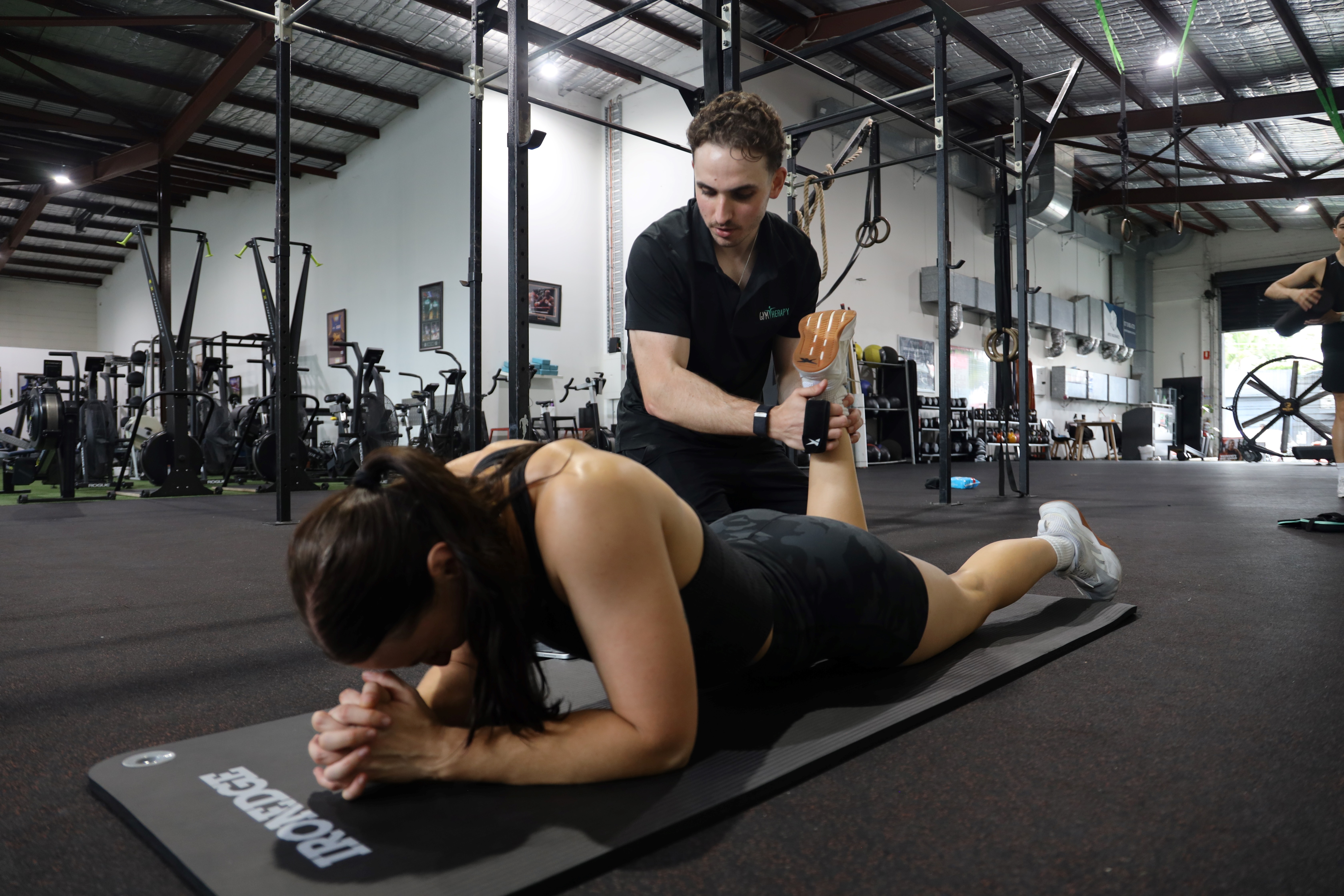
Manual therapy includes hands-on techniques to reduce pain and improve mobility:
- Joint mobilisation to restore normal knee movement
- Soft tissue release for tight muscles or fascia
- Dry needling techniques to reduce tissue tightness & pain
- Patellar mobilisation to improve tracking
Rebuilding strength, mobility and function are the cornerstones of knee pain rehabilitation. Evidence shows that strengthening programs reduce pain and improve function across most knee conditions.
Key rehab focus areas for knee pain:
- Quadriceps: Essential for patellofemoral pain, meniscus injuries, and osteoarthritis
- Hip abductors and glutes: Control knee valgus and improve pelvic stability
- Hamstrings: Balance knee forces and support ACL health
- Calf muscles: Support knee function and reduce load on the joint
At our Brisbane clinics, we prescribe progressive programs starting with low-load exercises and advancing to sport-specific movements as pain allows.
Many knee pain cases involve training load errors:
- Increase of training volume too quickly
- Insufficient recovery between sessions
- High-impact activities without adequate preparation
We provide strategic load management guidance to reduce pain whilst maintaining fitness. It involves tracking training volume, intensity, frequency and other external factors.
Temporary activity modifications to promote healing while staying active:
- Reducing impact (e.g., replacing some running with cycling or swimming)
- Adjusting gym exercises (e.g., partial range squats instead of full depth)
- Changing training surfaces or footwear
The goal is strategic modification, not complete rest.
In some cases, we use:
- Patellar taping to improve tracking and reduce pain
- Bracing for ligament support (post-injury or return-to-sport)
- Compression for swelling management
It is important to note that taping and bracing are adjuncts to exercise and strengthening, not standalone treatments.
Objective strength testing provides valuable data for knee injury management.
Baseline strength:
Compares your strength to normative data for your age, sex, and activity level. This identifies any weakness contributing to knee pain.
Left-right asymmetry:
Asymmetry greater than 10-15% increases injury risk and may indicate compensation patterns. Force plate testing quantifies asymmetry precisely.
Progress tracking:
Re-test every 4-6 weeks to measure strength gains objectively. This data guides progression and return-to-sport decisions.
Return-to-sport criteria:
For athletes recovering from significant knee injuries, force plate testing helps determine readiness to return to full training and competition.
- Athletes with recurring knee pain
- Post-surgical rehabilitation (ACL reconstruction, meniscus repair)
- Runners with patellofemoral pain or ITB syndrome
- Anyone wanting objective data to guide treatment and training
Force plate testing sessions take 30-45 minutes and are conducted by GymTherapy physiotherapists trained in strength assessment and interpretation.
Seek physiotherapy assessment if you experience:
Pain that interferes with activity:
If knee pain limits your running, sport, or daily activities, physiotherapy can help identify the cause and provide targeted treatment.
Pain that persists beyond a few days:
Acute pain from minor overload often settles with rest. If pain persists beyond 3-5 days or worsens, assessment is recommended.
Recurring knee pain:
If you've had multiple episodes of knee pain, there may be underlying strength or biomechanical factors that requires diagnosis and treatment.
Swelling or instability:
Significant swelling, feeling of instability, or inability to weight-bear may indicate ligament or meniscus injury. Early assessment and appropriate management improves outcomes.
Pre-surgery or post-surgery:
Physiotherapy before knee surgery (prehabilitation) can improve surgical outcomes. Post-surgical rehabilitation is essential for optimal recovery.
We may recommend medical imaging or specialist consultation for:
- Suspected fracture (significant trauma, inability to weight-bear)
- Suspected ligament rupture (ACL, PCL, MCL)
- Significant meniscus tear with mechanical symptoms (locking, catching)
- Lack of progress with conservative treatment after 6-8 weeks
- Red flags such as unexplained swelling, night pain, or systemic symptoms
Following treatment and once your knee pain resolves, prevention strategies going forward reduce recurrence risk. These include:
Continue strength training 2-3 times per week focusing on:
- Quadriceps and hip strength
- Posterior chain (glutes, hamstrings)
- Single-leg stability exercises
Strength maintenance is the best injury prevention strategy.
Avoid rapid increases in training volume or intensity:
- Follow the 10% rule (increase weekly volume by no more than 10%)
- Include recovery weeks in your training plan
- Monitor training load using tools like perceived exertion or training logs
If gait analysis or movement screening identified issues:
- Continue technique drills and cues
- Strengthen identified weaknesses
- Consider running gait re-analysis to track improvements
Mild knee discomfort can occur with training increases. However, if pain:
- Persists beyond warm-up
- Worsens during a session
- Affects your gait or form
- Continues the next day
Reduce load immediately and address the issue before it progresses.
GymTherapy Brisbane treats knee pain and associated conditions at two locations:
West End Clinic
387 Montague Road, West End, QLD 4101
Newstead Clinic
27b Doggett Street, Newstead, QLD 4006
All clinics are equipped with AxIT force plates for objective strength testing.
How to book:
1. Online: Visit gymtherapy.com.au
2. Call: 0417 171220
3. Email: info@gymtherapy.com.au
What to bring:
- Medicare card (if referred via EPC) and health insurance card/details
- Any relevant imaging (X-ray, MRI)
- Training log or activity history
- Footwear you wear during painful activities
Recovery time for knee pain can vary based on diagnosis and severity. Minor patellofemoral pain may improve in 2-4 weeks with strengthening and load management. More significant conditions like patellar tendinopathy or post-surgical rehabilitation may take 8-52 weeks. At GymTherapy, we provide a holistic, data-driven and clinician led approach with realistic timelines, during your initial assessment based on your specific situation.
Most knee pain can be assessed and treated without imaging. We recommend an MRI only if clinical findings suggest significant structural damage (e.g., suspected ligament rupture or meniscus tear requiring surgical consideration) or if symptoms don't improve with appropriate treatment. Many MRI findings like minor meniscus tears or cartilage changes are common in pain-free individuals and don't change management.
Yes, research shows physiotherapy can significantly improve pain and function in knee osteoarthritis. Treatment includes strengthening, load management, manual therapy, and activity modification to manage arthritis symptoms. We work with you to maintain activity, increase confidence and quality of life even with moderate to severe arthritis.
Complete rest is rarely necessary or beneficial. Modified activity that reduces pain while maintaining fitness is preferred. For example, if running causes knee pain, you might reduce running volume and add cycling or swimming to maintain cardiovascular fitness while your knee recovers. We guide appropriate activity modification based on your symptoms and goals.
Strength testing isn't essential for all knee pain, but it provides valuable objective data. Force plate testing quantifies strength deficits and asymmetry that may contribute to injury. It's particularly useful for athletes, recurring injuries, or when you want objective measures to track progress. Many clients choose strength testing to guide rehabilitation and return-to-sport decisions.
Yes, we provide rehabilitation after knee surgeries including ACL reconstruction, meniscus repair, and knee replacement. Post-surgical physiotherapy is essential for optimal recovery and movement. We work closely with your surgeon and follow evidence-based protocols tailored to your surgery type and individual progress.
Yes, we specialise in treating running-related knee pain including runner's knee (patellofemoral pain) and ITB syndrome. Treatment combines physiotherapy with running-specific assessment like gait analysis and force plate testing. We also provide load management guidance to keep you running while managing injury.
Yes, GymTherapy Brisbane is registered with all major private health insurers. You can claim physiotherapy sessions through your health fund's extras cover. We process claims via HICAPS for on-the-spot rebates at all of our clinics.
Don't let knee pain limit your activities and daily life. At GymTherapy Brisbane, we combine evidence-based physiotherapy with objective strength testing to identify the cause of your knee pain and provide targeted treatment.
Book your knee pain assessment at our West End or Newstead clinic and receive expert care from our AHPRA-registered physiotherapists.
Call: 0417 171220
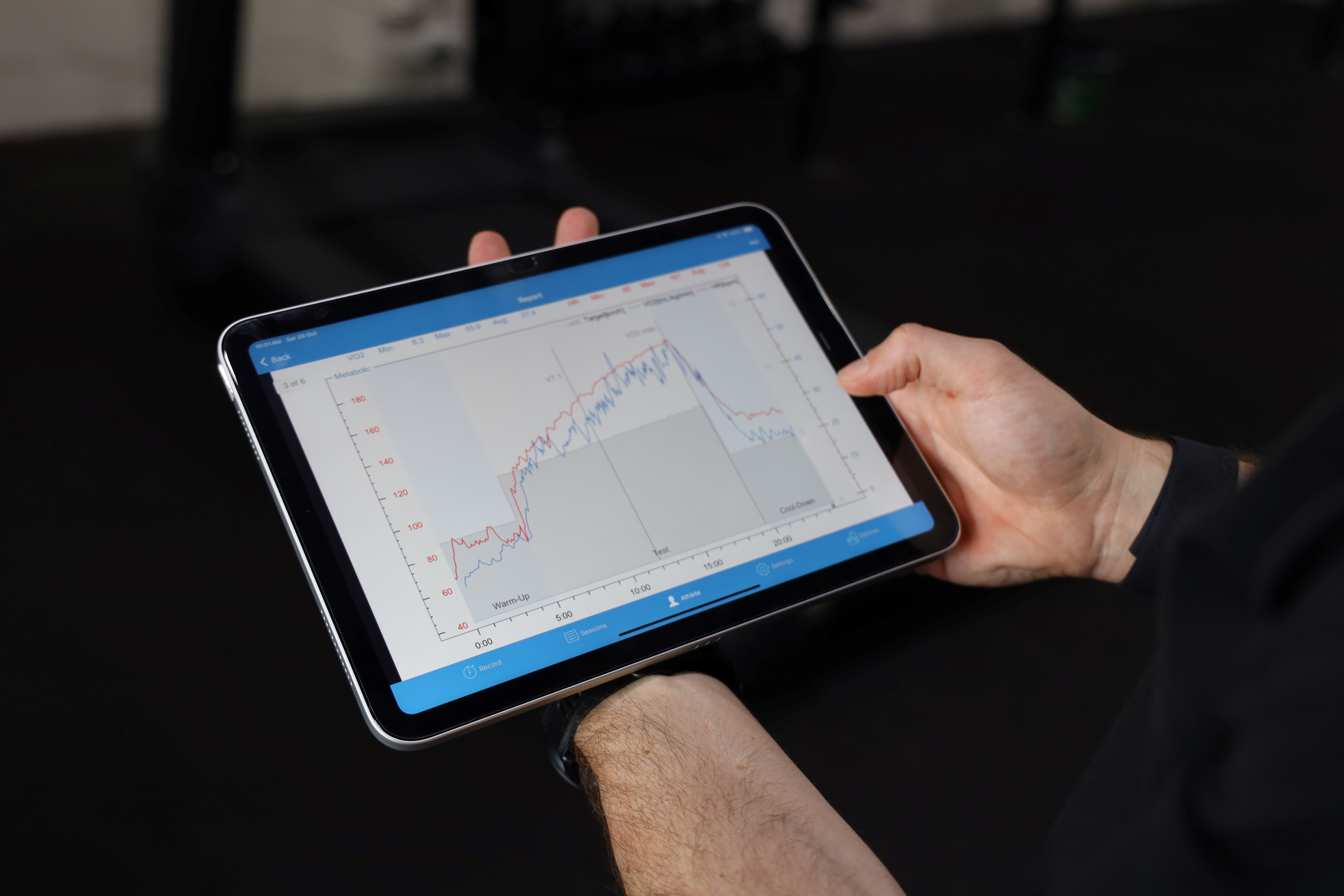
Unlock your true health and performance potential with personalised data-driven protocols to enhance your performance, rehabilitation & longevity at GymTherapy.
We can also assist with tailored physiotherapy and stretch therapy, longevity testing, resting metabolic rate (RMR) testing more.
Lorem ipsum dolor sit amet, consectetur adipiscing elit. Suspendisse varius enim in eros elementum tristique. Duis cursus, mi quis viverra ornare, eros dolor interdum nulla, ut commodo diam libero vitae erat. Aenean faucibus nibh et justo cursus id rutrum lorem imperdiet. Nunc ut sem vitae risus tristique posuere.