Proximal hamstring tendinopathy (PHT), often called hamstring tendonitis, is an overuse problem of the hamstring tendon where it attaches to the sit bone (ischial tuberosity). It causes deep pain in the lower buttock that builds up gradually and is usually worse with running, hills, lunging, squatting and sitting. It is different from a sudden hamstring strain.
PHT is common among distance runners and athletes who do a lot of straight-line or change-of-direction running. Unlike an acute hamstring strain, which comes on suddenly with an immediate loss of function, PHT develops over time. For high-level runners in particular, it can be very limiting. Because the pain can persist and sometimes responds slowly to treatment, it can be difficult to manage. Management focuses on reducing symptoms while restoring functional capacity. Exercise and load modification are the main tools, and injections are sometimes considered in highly disabling cases.
Key Takeaways
- Where it hurts: deep, localised pain at the sit bone, typically worse with sitting, uphill running, sprinting and bending forward.
- Why it happens: the tendon is irritated by a mix of tensile load (fast running, terminal swing) and compression (deep hip flexion and sitting).
- Common triggers: sudden spikes in running or gym load, new hill or track blocks, and overstriding.
- Scans are usually not needed: a clinical examination and provocation testing are generally enough to make the diagnosis.
- Rehab is load-based: heavy, slow strength work starts in low hip-flexion positions and progresses to deeper ranges, guided by symptoms rather than fixed timelines.
Hamstring Tendon Anatomy and Running Mechanics
All three hamstring muscles start from the ischial tuberosity (sit bone), and the proximal hamstring tendon is loaded hardest during the late swing phase of running, when the muscle is long and working eccentrically to slow the leg. Positions of deep hip flexion and sitting also compress the tendon against the bone, which can aggravate it.
Understanding the anatomy of the proximal hamstring insertion, and the loads placed on it during different tasks, is essential for targeted rehabilitation and recovery.
The hamstring muscle group is made up of three muscles: the biceps femoris, semitendinosus and semimembranosus. All three originate from the ischial tuberosity. The semitendinosus and biceps femoris share a conjoined tendon at the ischial tuberosity, while the semimembranosus attaches slightly deeper.1
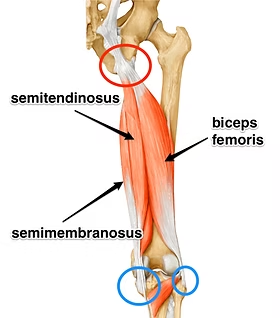
During running, the hamstrings are active throughout the gait cycle, with spikes in demand at key moments such as terminal swing, when they decelerate knee extension while the hip is flexed and then continue to drive hip extension during stance.2 Terminal swing combines a lengthened muscle-tendon unit with a high-force eccentric contraction, and is estimated to be the moment of peak tensile load on the proximal tendon.
While the main job of a tendon appears to be transmitting tensile load, compressive forces have also been shown to contribute to tendon changes and the development of tendon pathology.3 In PHT, compressive load generally occurs at the ischial tuberosity during activities involving deeper hip flexion, such as squatting, lunging, kicking and hamstring stretching, or through direct pressure when sitting.4
Symptoms: What Does Proximal Hamstring Tendinopathy Feel Like?
The main symptom of proximal hamstring tendinopathy is deep pain in the lower buttock, centred on the sit bone. It is typically worse with prolonged sitting, bending forward, uphill running and sprinting, while easy running may feel relatively comfortable early on. Stiffness in the morning or after sitting is also common.
PHT has features that help distinguish it from other sources of buttock pain. Pain is usually localised to the ischial tuberosity region and tends to be worse with sitting (particularly prolonged sitting or leaning forward) and with activities that load the tendon in a lengthened position.
Runners often report pain with:
- Accelerating, sprinting and high-intensity running efforts
- Hill running, especially uphill, which needs more hip flexion
- Bending forward and sitting on hard surfaces
- Stairs, single-leg deadlifts and step-ups
Morning stiffness, or stiffness after a long period of sitting, is common. The condition is frequently, but not always, triggered by a training error: a sudden increase in sprint work, a move to hill or track sessions, or high-volume weeks on a tendon that has not been conditioned for them.
What Causes Hamstring Tendinopathy in Runners?
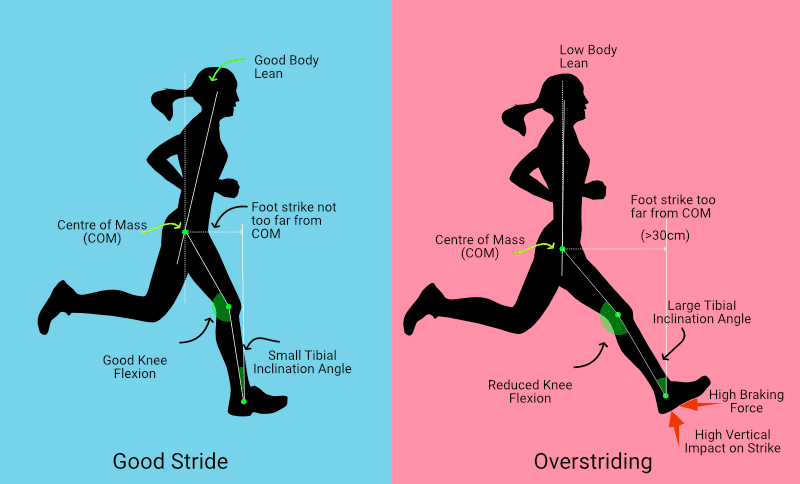
Hamstring tendinopathy in runners usually develops when the load on the tendon rises faster than its capacity to adapt. Common contributors include sudden increases in running or gym training, a change to hills or incline treadmill running, and running mechanics such as overstriding.
Factors that may predispose someone to PHT include, but are not limited to:
- Training load spikes (running or resistance training): increases in volume, intensity or frequency
- A change in running terrain or elevation, such as hill running or incline running on a treadmill
- Running mechanics: overstriding creates a braking force that increases the demand on the proximal hamstring tissues. A running gait analysis can show whether this applies to you.
Is It Hamstring Tendinopathy, a Strain, or Something Else?
Proximal hamstring tendinopathy needs to be told apart from other causes of buttock pain, including pain referred from the lower back or sacroiliac joint, ischial bursitis and an acute hamstring strain. A physiotherapist can usually do this with a clinical examination, without needing a scan.
The main conditions to rule out are:
- Referred pain from the lumbar spine or sacroiliac joint. Back-related pain can be felt in the buttock and down the leg. See our spinal physiotherapy page for more on this.
- Ischial tuberosity bursitis: more superficial pain directly over the sit bone.
- Acute hamstring strain: sudden onset, sometimes visible bruising, and an immediate loss of function. Read more in our hamstring strain rehab guide.
If pain is present on both sides, it is important to consider an underlying inflammatory cause such as spondyloarthritis. This would need a different set of investigations and a different management pathway.
Imaging is not generally required to diagnose PHT. A clinical examination and provocative testing are usually enough to confirm the diagnosis.
Proximal Hamstring Tendinopathy Exercises and Rehabilitation
Evidence-based rehab for proximal hamstring tendinopathy centres on progressive, high-load strength training for the hamstrings. Exercises start in positions with less hip flexion to limit compression on the tendon, then progress into deeper hip-flexion positions as symptoms allow. Running is usually reduced to a manageable level rather than stopped completely.
Alongside strength work, running loads are reduced to a level the tendon can tolerate. In some more severe cases, reduced running is not tolerated and a period off running may be needed.
Early loading aims to manage the tensile and compressive forces at the ischial tuberosity. This is commonly done with heavy slow resistance training using different contraction types (concentric, eccentric and isometric), mainly in reduced hip-flexion angles. The goal is to load the tendon without provoking it. As symptom tolerance improves, exercises are progressed into greater hip flexion so the tendon is exposed to combined stretch and compressive forces.5
Examples of exercises commonly used, from shorter to longer hamstring lengths, include:
- Bosch hold: an isometric hamstring hold in a shortened position
- Step-ups: a single-leg strength exercise in a moderate hip-flexion range
- Romanian deadlifts (RDLs): loading the hamstrings at longer lengths with greater hip flexion
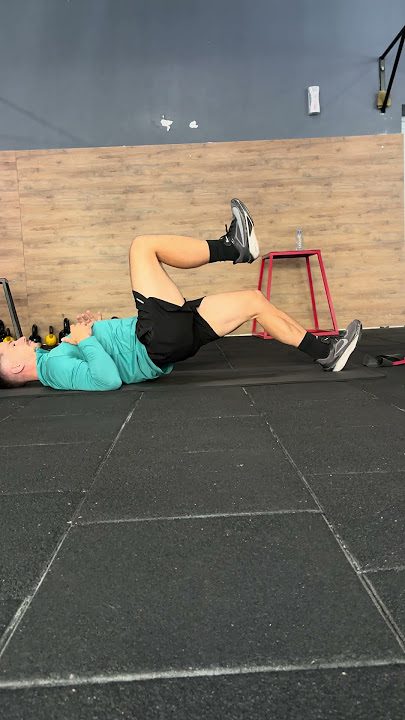

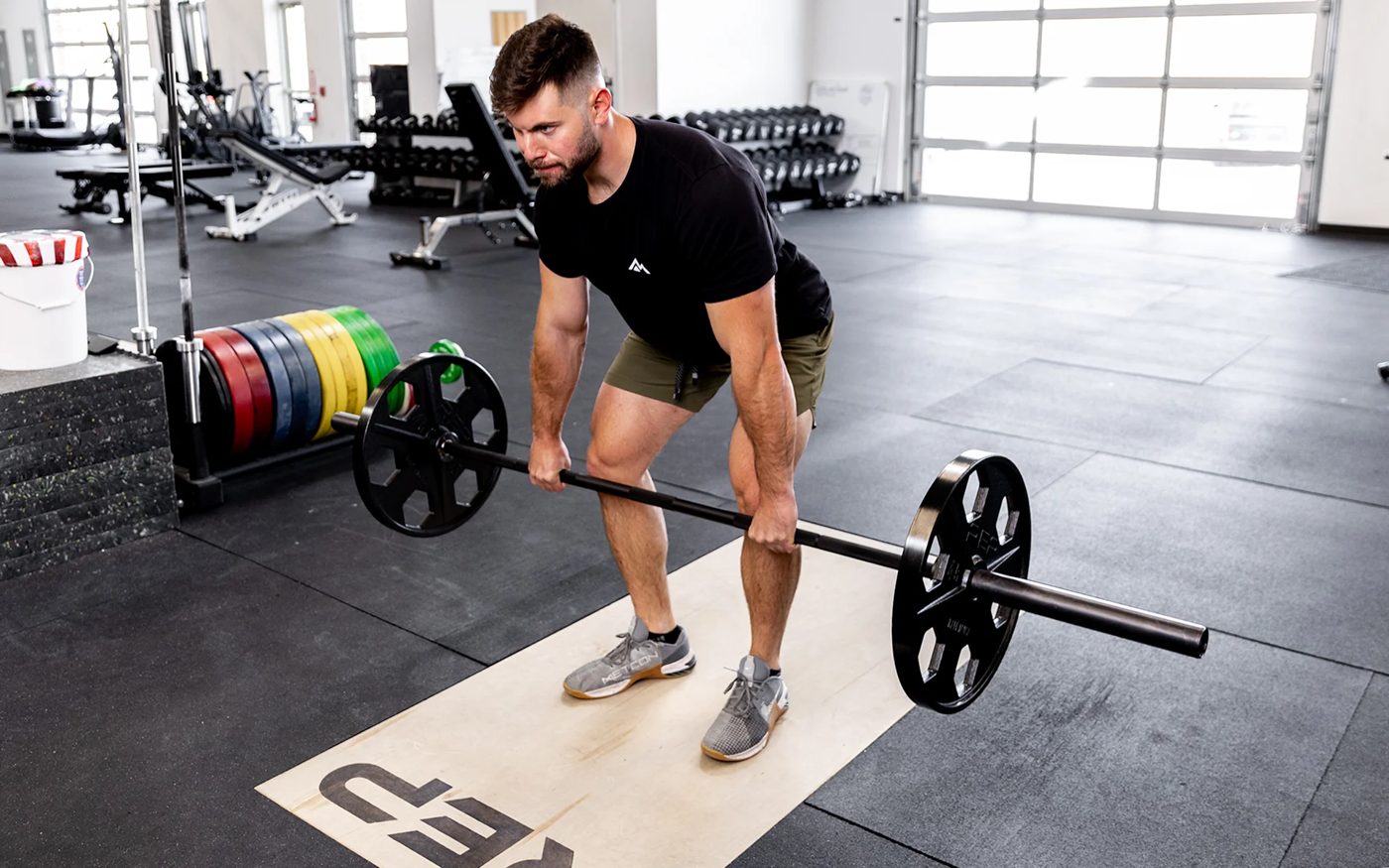
The right exercises, load and progression depend on the individual, so these are examples rather than a prescription. Our strength and power testing can measure hamstring strength side to side and help guide when to progress.
Returning to Running With Hamstring Tendinopathy
Running is usually built back up once the hamstring tendon tolerates strength work without a delayed flare-up. Volume and speed are progressed separately, one at a time, with volume normally increased before intensity. Symptoms up to 3/10 are generally acceptable if they settle back to baseline within 24 hours.
Once the tendon shows tolerance to training without symptom latency, running is reintroduced or progressed using a structured framework that separates volume from velocity. Only one variable is progressed at a time, and volume tends to be favoured over intensity. Other running-related considerations in rehab include:
- Gait retraining: increasing running cadence by 5–10% shortens stride length, placing the foot strike closer to the centre of mass. This aims to reduce peak eccentric strain and compression at the sit bone during terminal swing.
- Volume ramp-up: running on flat ground or a mild incline (3–5%) to limit hip flexion. Continuous aerobic volume is then built weekly, keeping a 48-hour recovery window between sessions.
- Intensity progression: high-speed running is reintroduced gradually, starting with controlled accelerations and strides and progressing to hill sprints.
Across both strength and running progressions, load is guided by a pain-monitoring framework: symptoms up to 3/10 are acceptable during or immediately after activity, provided they return to baseline within 24 hours and do not increase.6
Frequently Asked Questions
How long does proximal hamstring tendinopathy take to settle?
It varies a lot between people. Recovery depends on how long symptoms have been present, how irritable the tendon is and how consistently the rehab is followed. Progress is guided by symptoms and strength rather than fixed timelines, which is why an individual assessment is useful.
Should I stretch a sore hamstring tendon?
Hamstring stretching places the tendon in deep hip flexion, which compresses it against the sit bone. That compression is one of the loads known to aggravate PHT, so stretching often irritates symptoms early on. Strength work in lower hip-flexion positions is usually the starting point instead.
Can I keep running with hamstring tendinopathy?
Many runners can keep running at a reduced, manageable load, often on flatter ground and at easier paces. Pain up to 3/10 that settles within 24 hours is generally acceptable. In more severe cases, a short break from running may be needed.
Why does hamstring tendinopathy hurt when I sit?
Sitting puts direct pressure on the ischial tuberosity, where the hamstring tendon attaches. This compression, especially on hard surfaces or when leaning forward, can provoke a sensitive tendon.
Do I need a scan for hamstring tendinopathy?
Usually not. A clinical examination and provocation tests are generally enough to diagnose PHT. Imaging may be considered if symptoms do not respond as expected or another condition is suspected.
Conclusion
Successful rehab for proximal hamstring tendinopathy relies on direct, progressive loading of the hamstring muscle and tendon. Exercises move step by step from low hip-flexion positions to deeper, more dynamic demands while managing compression at the ischial tuberosity. Returning to running means reintroducing volume and speed deliberately, using cadence adjustments, intervals and gradual increases in intensity, with every progression guided by symptoms rather than fixed timelines.
If you have deep buttock or sit-bone pain that is affecting your running, a physio for runners assessment or a full RunLab assessment (clinical exam, strength and power testing and running gait analysis) can identify what is driving your symptoms and build a plan around your training.
Written by Jonathan Parra, MSc Physiotherapy, AHPRA-registered physiotherapist at GymTherapy. This article is general information only and is not a substitute for an individual assessment.
Book Now
References
- Philippon MJ, Ferro FP, Hechler DK, et al. A qualitative and quantitative analysis of the attachment sites of the proximal hamstrings. Knee Surgery, Sports Traumatology, Arthroscopy. 2014;22(11):2518–2523.
- Goom T, Malliaras P, Raymond M, Purdam C. Proximal hamstring tendinopathy: clinical aspects of assessment and management. Journal of Orthopaedic & Sports Physical Therapy. 2016;46(6):483–493. DOI: 10.2519/jospt.2016.5986.
- Lempainen L, Johansson K, Banke IJ, et al. Expert opinion: diagnosis and treatment of proximal hamstring tendinopathy. Muscles, Ligaments and Tendons Journal. 2015;5(1):23–28.
- Rich ALF, Cook JL, Hahne AJ, Ford JJ. A pilot randomised trial comparing individualised physiotherapy versus shockwave therapy for proximal hamstring tendinopathy: a protocol. Journal of Experimental Orthopaedics. 2023;10:55. DOI: 10.1186/s40634-023-00615-x.
- Dizon P, Jeanfavre M, Leff G, Norton R. Comparison of conservative interventions for proximal hamstring tendinopathy: a systematic review and recommendations for rehabilitation. Sports. 2023;11(3):53. DOI: 10.3390/sports11030053.
- Rich A, Cook J, Hahne A, Ford J. Treatment of proximal hamstring tendinopathy with individualized physiotherapy: a clinical commentary. International Journal of Sports Physical Therapy. 2025;20(6):892–910. DOI: 10.26603/001c.138308.